

AI in software testing has become heavily associated with automation promises. Many AI-powered testing tools market fully autonomous test execution, self-healing tests, and automated test case generation as the future of software testing.
At TestResults, our approach is more technical and more deliberate.
We use artificial intelligence and machine learning to improve software quality, optimize testing workflows, reduce repetitive testing tasks, and strengthen test reliability. At the same time, we keep human oversight central to the testing process because stable software testing still depends on context, engineering discipline, and explainability.
That principle shapes how we build VisualSense, our automated visual testing engine for screenshot-based UI analysis. VisualSense combines deterministic computer vision pipelines, OCR logic, Vision Transformer embeddings, and fine-tuned AI models to improve accurate testing across web and mobile applications.
The goal is straightforward: improve test coverage and reduce manual effort without turning software testing into an unpredictable black box.
The current problem with AI in software testing
A large portion of AI software testing tools rely almost entirely on probabilistic AI models. These systems can automatically generate test scripts, detect UI elements, and produce automated tests quickly. The issues often appear later during regression testing, test maintenance, and long-term test execution stability.
QA teams frequently encounter:
- flaky tests
- unstable automated test scripts
- inconsistent test results
- low test accuracy
- excessive test maintenance efforts
- difficult debugging workflows
In enterprise environments, testing workflows must stay reliable across large testing cycles, changing interfaces, historical data variations, and multiple application states.
That requirement changes how AI should be integrated into software testing tools.
At TestResults, we take a hybrid approach that combines deterministic computer vision with machine learning models. This allows QA teams to understand how detections happen during test execution instead of relying entirely on opaque AI inference.
The result is more stable regression testing, more reliable automated visual testing, and better long-term maintainability.
Why we are user-centric instead of AI-driven
We previously discussed different types of software testing and why quality assurance must stay user-centric.
That philosophy directly affects how we approach AI in software testing.
Human testers still provide critical value during:
- exploratory testing
- regression testing
- security testing
- performance testing
- test strategy planning
- evaluating user stories
- validating test scenarios
- reviewing test results
- maintaining software quality
AI tools can automate repetitive tasks and support automated test case generation, but software testing still requires contextual understanding of the software development lifecycle.
For example:
- AI cannot independently prioritize business-critical workflows correctly in every situation.
- AI cannot fully understand product-specific edge cases.
- AI cannot replace domain expertise during exploratory testing.
- AI cannot reliably determine whether the same test still reflects current business intent after application changes.
This is one reason why many AI-driven testing tools struggle with long-term test maintenance and unstable automated tests.
VisualSense uses a human-in-the-loop structure instead of attempting full autonomous testing.
Users teach the system how their applications behave. The platform then applies machine learning to scale those detections across the testing suite.
This structure improves automated visual testing while preserving human oversight and explainability.
The architecture behind VisualSense
VisualSense uses two complementary systems:
| System | Purpose |
|---|---|
| Classical computer vision pipeline | Stable UI detection and deterministic analysis |
| AI-assisted visual recognition | Adaptive recognition for custom enterprise interfaces |
This layered architecture allows QA teams to maintain tests more effectively while improving automated visual testing accuracy.
Classical computer vision pipeline
The first stage of the VisualSense testing process relies on deterministic image processing instead of generative AI.
The pipeline includes:
- grayscale normalization
- gamma correction
- TopHat and BlackHat morphology
- Otsu binarization
- adaptive directional dilation
- connected component extraction
- OCR-based class fusion
- non-maximum suppression
Each stage solves a specific problem in visual testing.
Morphological operations isolate controls from both dark-themed and light-themed interfaces. Adaptive directional dilation groups related pixels into coherent UI regions depending on interface density. OCR logic reads labels such as “Save” or “Name:” and uses them to refine control classification.
This deterministic pipeline creates stable detection behavior during regression testing and continuous testing workflows.
When issues appear during test execution, QA teams can trace the detection path instead of investigating opaque AI outputs.
Where machine learning improves software testing
AI becomes valuable when interfaces become highly customized.
Enterprise applications frequently contain:
- proprietary UI components
- complex dashboards
- custom dropdown systems
- internal design frameworks
- non-standard layouts
Generic AI-powered testing tools often struggle in these environments because large AI models cannot generalize perfectly across every interface type.
VisualSense addresses this problem through few-shot visual learning.
During the teach phase, users provide examples of controls such as:
- buttons
- tables
- input fields
- dropdowns
- custom UI components
The system converts these controls into embeddings using a Vision Transformer encoder.
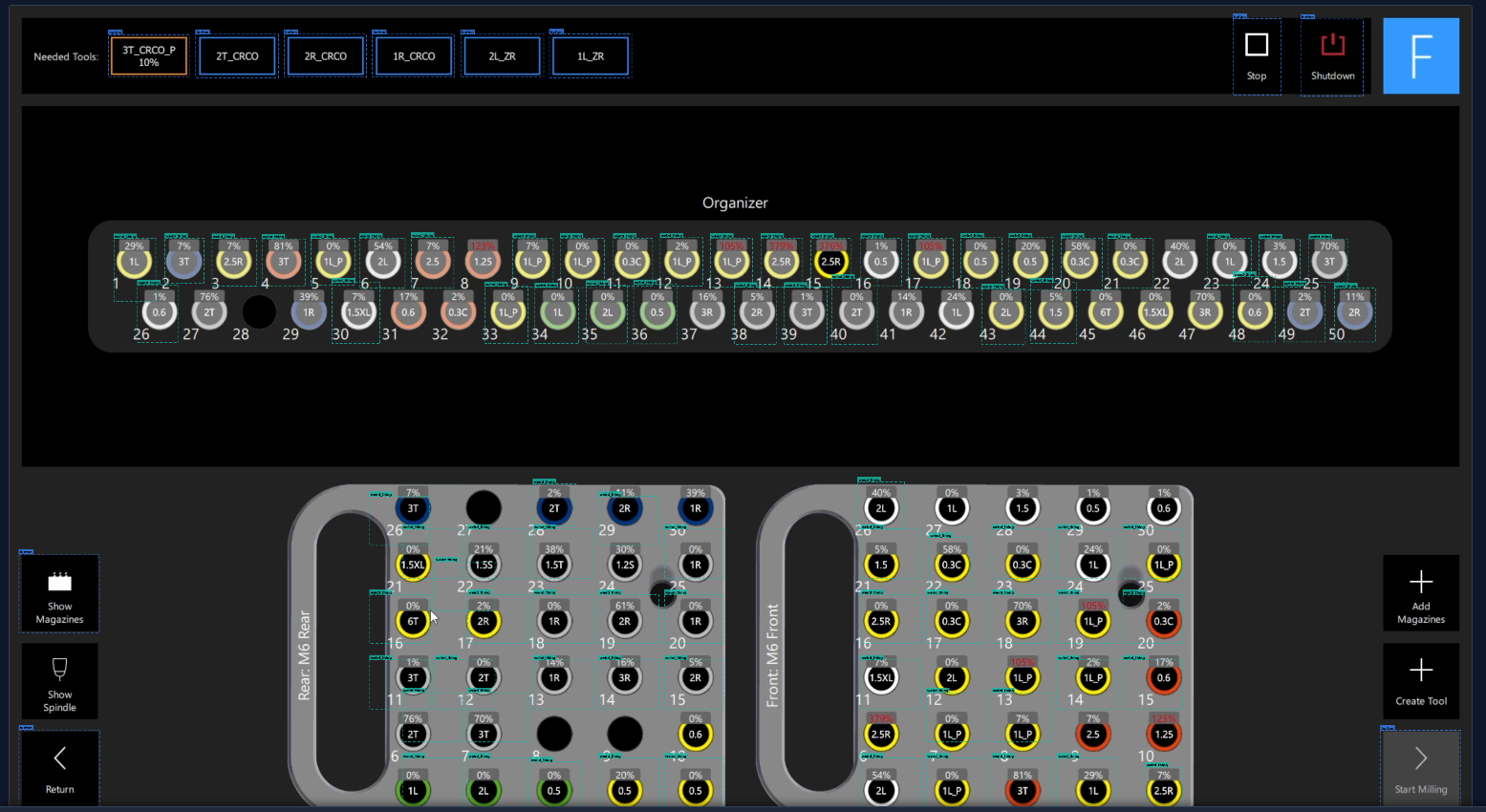
During detection, the platform uses cosine similarity matching to identify visually similar controls across the application.
This structure improves test accuracy while reducing dependency on massive retraining cycles and historical test data collection.
It also reduces test maintenance efforts because UI recognition becomes more adaptable to layout changes and styling differences.
A practical framework for building a complete testing suite
Many teams assume improving test coverage simply means creating more automated tests.
That approach often creates bloated testing suites filled with duplicate test cases, unstable automated test scripts, and repetitive testing tasks that become difficult to maintain.
At TestResults, we encourage QA teams to evaluate software testing maturity through five core areas:
| Area | Key Question |
|---|---|
| Coverage | Are critical workflows protected? |
| Reliability | Can teams trust test results consistently? |
| Maintainability | Can QA teams maintain tests efficiently over time? |
| Visibility | Can failures be explained and debugged quickly? |
| Adaptability | Can the testing suite handle UI and workflow changes? |
This framework helps teams build stable testing workflows without sacrificing maintainability.
1. Prioritize high-risk workflows first
Regression testing should protect the areas of the application that directly affect users and revenue.
This typically includes:
- authentication
- onboarding
- payment systems
- checkout flows
- account management
- reporting dashboards
- approval workflows
These workflows should receive the strongest automated test coverage before expanding into secondary features.
Many testing suites fail because they prioritize test quantity over business impact.
2. Combine automated tests with exploratory testing
Automated tests work best when paired with exploratory testing.
Manual testers still uncover:
- UX inconsistencies
- accessibility problems
- unexpected edge cases
- workflow gaps
- unclear interactions
AI-powered testing improves scale and speed, but exploratory testing remains necessary for identifying issues outside predefined test scenarios.
QA teams that rely exclusively on automated test scripts often miss critical usability and workflow problems.
3. Monitor flaky tests continuously
Flaky tests reduce trust in the testing process very quickly.
QA teams should actively monitor:
- unstable automated test scripts
- inconsistent test execution behavior
- environment-related failures
- recurring visual mismatches
- unreliable selectors
VisualSense reduces flaky tests through layered filtering and deterministic validation instead of relying entirely on AI probability scores.
This approach improves test reliability across continuous testing and regression testing workflows.
4. Analyze historical test data
Historical data can reveal weaknesses across the software development lifecycle.
Teams should regularly evaluate:
- repeated failure patterns
- unstable UI components
- recurring regression issues
- slow test execution areas
- unstable environments
- long-term defect prediction trends
AI-assisted analysis helps QA teams optimize testing workflows and identify weak points earlier in the testing cycle.
Historical test data also helps teams identify where manual effort continues increasing unnecessarily.
5. Focus on maintainability
Large testing suites become difficult to maintain when teams prioritize quantity over stability.
A maintainable testing suite should:
- minimize duplicate test cases
- reduce repetitive testing tasks
- simplify test maintenance
- improve test reliability
- support continuous testing
- remain adaptable during UI changes
This is one reason why VisualSense uses adaptive visual recognition instead of depending entirely on rigid selectors or brittle traditional test automation structures.
The value of AI-assisted testing for QA teams
The value of AI in software testing should not be measured by how autonomous a platform sounds.
The real value appears when QA teams can:
- improve test coverage without creating unstable tests
- reduce test maintenance efforts
- strengthen regression testing reliability
- optimize testing workflows
- reduce repetitive testing tasks
- improve test accuracy
- support continuous testing at scale
- maintain software quality across fast release cycles
AI-assisted software testing becomes most useful when it helps teams work faster without reducing visibility into how the testing process behaves.
That balance matters significantly in enterprise environments where reliability, explainability, and maintainability directly affect release quality.
AI in software testing still requires engineering discipline
Generative AI and natural language processing will continue influencing software testing.
AI-powered testing tools will likely improve:
- test data generation
- automated test scripts
- defect prediction
- automated test case generation
- test creation workflows
- test management analysis
At the same time, software testing still depends on:
- engineering quality
- testing strategy
- reliable test execution
- human oversight
- maintainable testing workflows
- stable automated tests
At TestResults, we use AI to improve software testing where it creates measurable value for QA teams.
We use machine learning to strengthen visual testing.
We use AI-assisted recognition to improve test accuracy.
We use automated visual testing to reduce repetitive testing tasks and support scalable regression testing.
We remain focused on explainability, reliability, and user-centric software quality because long-term testing stability matters more than AI marketing claims.
Teams looking to improve test coverage, reduce flaky tests, simplify test maintenance, and optimize testing workflows need software testing tools that remain reliable as applications grow more complex.
That requires more than automated test generation alone.
It requires stable visual recognition, maintainable testing workflows, strong regression testing practices, and clear visibility into how automated tests behave across the software development lifecycle.
VisualSense was built to support those goals through a hybrid architecture that combines deterministic computer vision with AI-assisted testing capabilities.
If your QA team wants to see how VisualSense supports automated visual testing, self-healing capabilities, regression testing, and scalable test automation across enterprise applications, you can book a demo with our team here.


.png&w=3840&q=75)