Nobody reads the 147-page requirements document.
At least not all of it.
Someone skims it. Someone attends a meeting about it. Someone forwards a Confluence page and says, "The important part is in there somewhere." Then QA is expected to figure out what could go wrong, what deserves testing, and what can wait until the next release.
This is exactly why risk-based testing sounds great in theory. Most teams agree that not all features carry the same level of risk. A broken password reset flow is probably more important than a typo on a settings page.
Critical functionalities, security vulnerabilities, and high-risk areas deserve more attention than low-risk features. The idea is simple: focus testing efforts where failures would hurt the most.
The problem is that implementing risk-based testing takes time. Someone has to review requirements, identify potential risks, assess business impact, and translate those identified risks into test cases.
When deadlines are tight, that work often gets skipped. Instead, testing efforts are driven by gut feeling, stakeholder requests, or whatever caused problems in the last release.
As software becomes more complex and teams are asked to do more with limited resources, that approach becomes harder to justify. The challenge isn't convincing people that risk-based testing works. It's finding a practical way to do it.
What is risk-based testing?
At its core, risk based testing is about making smarter choices with the time you have.
Most teams don't have unlimited time, people, or resources. If a release is around the corner, it simply isn't realistic to give every feature the same level of attention. That's where risk based testing comes in. Instead of trying to test everything equally, teams focus on the areas that are most likely to fail and cause the biggest problems if they do.
Think about a typical application. A broken payment flow, login issue, or security vulnerability will likely have a much bigger impact than a minor visual bug hidden deep in a settings menu. Risk based testing helps teams identify those high risk areas and prioritize testing efforts accordingly.
To do this, teams perform a risk assessment, looking at factors such as business impact, likelihood of failure, and potential consequences for users. The results help guide test planning, test design, and test execution, ensuring that testing efforts are focused where they will have the greatest impact.
The goal isn't to execute more tests. It's to make sure you're spending your testing efforts on the things that matter most. When done well, risk-based testing can help teams improve software quality, catch critical defects earlier, and make better use of limited resources.
Why most teams don't actually focus on implementing risk-based testing
If risk-based testing is such a sensible approach, why isn't everyone doing it?
Because the hardest part isn't the testing. It's everything that comes before it.
Before a team can prioritize testing efforts, they need to understand the application, review requirements, identify potential risks, assess business impact, and agree on what deserves the most attention. On a small project, that might be manageable. On a large enterprise application with hundreds of requirements, user stories, integrations, and stakeholders, it quickly becomes a challenge.
The problem is that risk identification is often a manual process. Someone has to read the documentation, spot potential failure points, evaluate risks, and decide which ones are worth testing. Different stakeholders may have different opinions, and not all risks are immediately obvious from the requirements themselves.
As deadlines get closer, many teams abandon the structured approach altogether. Instead, testing efforts are guided by experience, gut feeling, or whatever caused issues in the previous release. It's not necessarily the wrong approach, but it's difficult to know whether you're focusing on the most critical risks or simply the most visible ones.
This is where many risk-based testing initiatives fall apart. Teams understand the value of the methodology, but the effort required to perform risk analysis and keep it updated throughout the development lifecycle often outweighs the time they have available.
What if identifying risks took minutes instead of days?
This is where things start to get interesting.
The biggest obstacle to implementing risk based testing isn't a lack of knowledge or buy-in. It's the amount of manual work involved. Reading requirements, identifying risks, evaluating their impact, and turning them into actionable test cases can take hours or even days before a single test is executed.
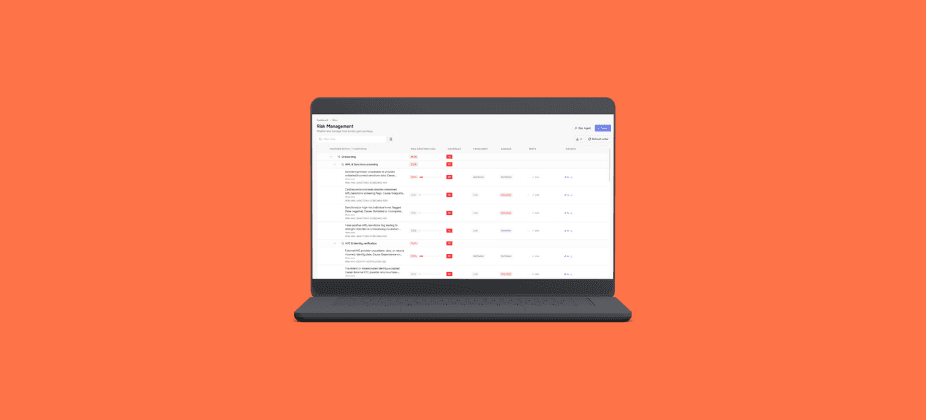
Now imagine uploading a requirements document and getting a prioritized list of risks a few minutes later.
Instead of digging through dozens of pages of specifications, user stories, and business requirements, teams can immediately see which areas deserve the most attention. The risks are ranked based on factors such as likelihood and potential impact, making it easier to focus testing efforts where they matter most.
This is the idea behind our QA Risk Agent.
Rather than asking testers, business analysts, and development teams to manually perform risk analysis for every release, the agent reviews the documentation, identifies potential risks, and creates a structured view of what could go wrong. From there, teams can move directly into test planning and generate targeted test cases based on the identified risks.
The goal isn't to replace human judgment. Testing teams still decide what should be tested and how. The goal is to remove the most time-consuming part of the process and give teams a much stronger starting point than a blank spreadsheet or a stack of requirements documents.
Risk-based testing becomes practical
Risk-based testing has been around for decades, yet many teams still struggle to make it part of their everyday testing process.
The reason isn't that the methodology is flawed. Most teams already understand the value of focusing on the areas that matter most. The challenge has always been the effort required to get there. Identifying risks, assessing their impact, prioritizing them, and turning them into meaningful testing activities takes time, especially as applications become more complex.
That's why many organizations end up treating risk-based testing as a one-time exercise rather than an ongoing part of their testing strategy. A risk workshop is held at the start of a project, a spreadsheet gets created, and then reality takes over. New features are added, priorities shift, and the original risk assessment quickly becomes outdated.
By reducing the effort required for risk identification and risk prioritization, teams can revisit risks more frequently and make better decisions throughout the development lifecycle. Instead of relying on assumptions, they can use a structured approach to focus testing efforts where they will have the greatest impact.
At the end of the day, the goal of risk-based testing isn't to create more documentation or add another step to the release process. It's to help teams spend less time deciding what to test and more time testing the things that actually matter.
And when identifying the most important risks takes minutes instead of days, risk based testing becomes a lot easier to put into practice.
Frequently asked questions
What is the main goal of risk based testing?
The goal of risk based testing is to focus testing efforts on the areas that are most likely to fail and have the biggest impact on the business or end users.
Rather than treating every feature equally, testing teams perform a risk assessment to identify potential risks, prioritize high-risk areas, and create test cases around the most important risks. This helps improve software quality, reduce critical defects, and make better use of limited testing resources.
How do teams implement risk-based testing?
Implementing risk-based testing typically starts with risk identification. Teams review requirements, user stories, business processes, and technical documentation to identify potential risks and assess their likelihood and impact. These identified risks are then used to guide test planning, test design, and test execution.
The challenge is that performing risk-based testing manually can be time-consuming, especially for large projects with complex requirements and multiple stakeholders.
How often should teams reassess risks during the testing process?
Risk based testing shouldn't be treated as a one-time activity. As requirements change, new features are introduced, and development teams move through the development cycle, risk levels can shift quickly. A low risk feature today may become a high risk area tomorrow if it is connected to critical functionalities or exposed to more users.
To keep their testing strategy effective, teams should regularly reassess risks throughout the testing process and use continuous feedback from testing activities, production incidents, and stakeholder input. This helps ensure that test priorities remain aligned with current project risk, resource allocation, and business goals. Regular risk monitoring also allows teams to make informed decisions, focus testing efforts where they will have the greatest impact, and reduce the likelihood of severe consequences such as critical failures, data breaches, or issues that affect users.
Can risk based testing be used alongside test automation?
Yes. Risk based software testing works well alongside both manual testing and test automation.
In fact, risk prioritization can help teams decide which test cases should be automated first. By focusing automation testing efforts on critical functionalities, high-risk areas, and potential failure points, teams can improve test coverage, strengthen system reliability, and catch critical failures earlier in the development cycle.
Risk-based testing helps ensure that automation is focused on the areas where it can deliver the most value.
How is risk-based testing different from other testing methods?
The biggest difference is that risk-based testing helps teams prioritize testing efforts based on risk rather than treating every feature equally. Instead of spreading resources across the entire application, teams focus testing efforts on the critical areas that are most likely to fail or have the biggest impact on users and the business.
To do this, teams identify potential risks, assess risks based on likelihood and impact, and use those findings to guide their testing approach. This often leads to better resource allocation, stronger risk mitigation, and fewer critical bugs.
Risk-based testing also helps teams decide where automation testing and regression testing will provide the most value. Rather than spending time on low risk areas, they can focus on high-risk functionality and the parts of the application that matter most.
The future of risk-based testing
Most teams don't have a software testing problem. They have a prioritization problem.
They know not every feature deserves the same level of attention. They know some failures carry far greater consequences than others. The challenge is finding those risks quickly enough to act on them.
That's what makes the QA Risk Agent different. Instead of spending days reviewing requirements, assessing risks, and building test plans from scratch, teams can start with a prioritized view of the areas that matter most.
Risk based testing isn't new. What's new is the ability to do it without turning risk analysis into a project of its own.
Want to see how it works? Join the QA Risk Agent waitlist and be among the first teams to turn software specifications into prioritized risks and targeted test cases in minutes. 🚀